
Materials & Finishes
We specialise in printing on plastic moulded components, including parts with textured surfaces and coated finishes. We also support selected non-plastic substrates where suitable.
Suitability depends on material grade, surface finish, geometry, and end-use. If you’re unsure, send a photo or sample and we’ll advise.
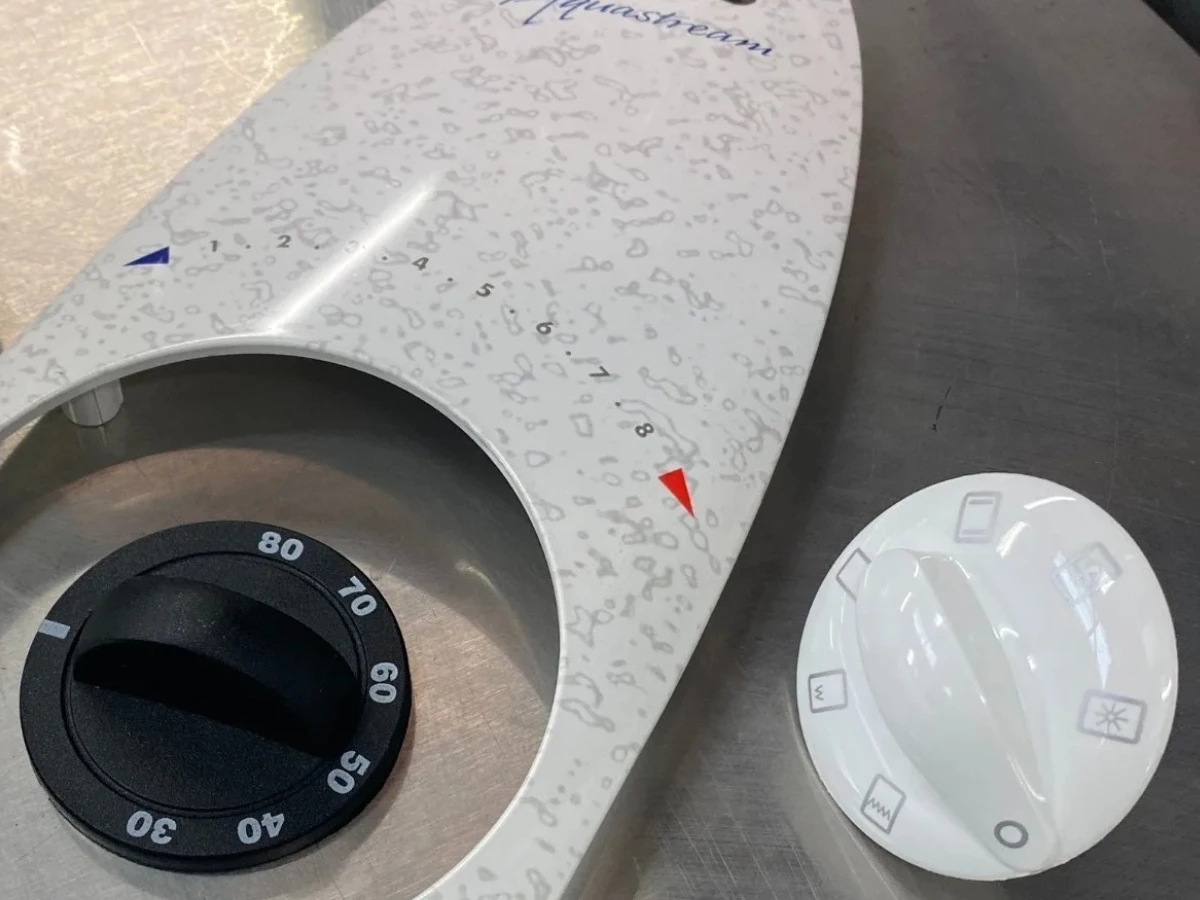
Injection mouldings and formed parts
Painted, lacquered, varnished
Grained, matte, gloss, soft-touch
Handling, abrasion, chemicals
Materials we regularly print
Our core work is printing on plastics. We also support selected non-plastic substrates where the surface condition and end-use requirements are suitable.
Plastics (core)
Injection mouldings and formed plastic components used in industrial and commercial products.
- ABS
- Polycarbonate (PC)
- Polypropylene (PP)
- Polyamide / Nylon (PA)
- Acrylic (PMMA)
- Acetal (POM)
- Blended and filled plastics (case-by-case)
Coated & painted finishes
Painted, lacquered or coated parts where finish quality and durability are required.
- Painted plastics
- Chrome plated plastics
- Lacquered / varnished finishes
- Soft-touch coatings (case-by-case)
- Powder-coated surfaces
Additional substrates
Selected non-plastic substrates where surface condition, flatness, and end-use are appropriate.
- Metals
- Ceramics
- Glass
- Wood-based materials
How material affects print performance
The same artwork can behave very differently depending on material and finish. The two main factors are adhesion (how well the mark bonds) and durability (how it performs in use).
- Pad printing suits complex geometry, textured surfaces and recessed areas.
- Hot foil printing suits flat or raised areas where premium finish and wear resistance are critical.
- Some parts use both processes on different features.
If you can provide a sample part, we can confirm suitability and set expectations before production.
What we’ll ask for
- Material (and grade if known)
- Surface finish / coating type
- Printable area and geometry
- Artwork file (vector preferred)
- End-use environment (handling, abrasion, chemicals)
Surface texture & finish considerations
Finish affects adhesion, edge definition, and repeatability. Some finishes are straightforward; others need confirmation by sample.
Common finishes
- Matte and gloss plastics
- Light textures and grains
- Painted and lacquered surfaces
- Hard coatings
Often needs confirmation
- Heavy textures / deep grains
- Soft-touch / rubberised coatings
- Low surface energy plastics
- Oily / release-agent contamination
If parts are new to printing, we may recommend a quick sample run to validate adhesion and durability before committing to production.
End-use environment
Tell us how the part is used. This helps us select the most appropriate process and materials.
- Frequent handling / abrasion
- Chemicals, oils, cleaners
- Outdoor exposure / UV
- Heat and temperature cycling
- Assembly and packaging handling
Choosing the right process for the material
Material and geometry often determine the most reliable process. The notes below are a guide — we’ll confirm suitability during quotation.
Pad printing
Best for moulded parts with curves, recesses, ribs, and textured finishes. Suitable for multi-colour legends and functional markings.
- Complex geometry and tight clearances
- Textured and grained surfaces
- Multiple colours (where required)
- Repeat runs with consistent positioning
Hot foil printing
Best for defined flat or raised areas where durability and a premium finish are critical. Ideal for metallic and solid foils.
- Flat / raised faces on rigid parts
- Premium metallic and solid finishes
- High wear resistance in use
- Repeatability across production
Artwork, jigs & tooling
We can support artwork setup, plate/die manufacture, and jig/fixture design to ensure accurate repeatability.
- Vector artwork checking and preparation
- Pad printing plates / hot foil dies
- Jigs and fixtures for consistent location
- Repeat orders matched to approved standards
Request a quote
Send your drawings, artwork, material details and quantities — we’ll advise on suitability and provide a clear quote.
If you’re unsure about the material or finish, send a photo or sample and we’ll help confirm the best approach.